Free shipping on orders over €99

Category: News

  • Swim faster by focusing on your stroke rate.

    In our previous blog, we discussed lap time. The time to perform a lap consists of several components. You can calculate lap time using following formula: Lap time = Underwater time + Turn time + (stroke count / stroke rate)
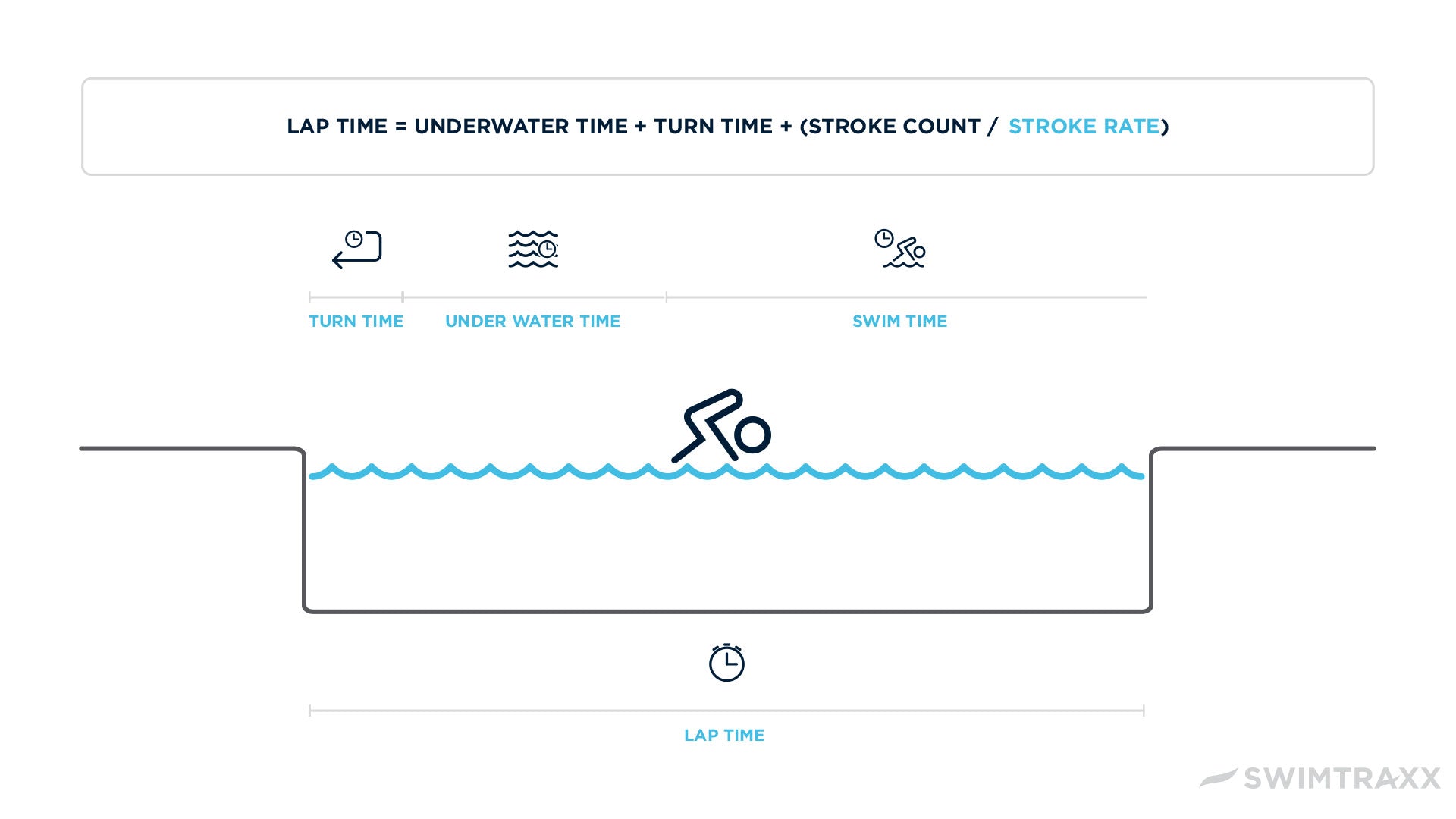
    Figure: the laptime breakdown.

    Three major components make out the time you take to swim a lap. Underwater time is the time you spend underwater after a turn. The turn time is the time you take to perform a turn at the wall. The last component is the swimming time, which is made up of a certain amount of strokes (stroke count) and the stroke rate at which you perform them. Stroke rate is expressed in stokes per minute. Swimtraxx can measure all the parameters used in the formula above in real-time, giving you the opportunity to focus more on your swim workout. This blog will discuss stroke rate in more detail.

    Distance per stroke

    The speed of a swimmer can be calculated by multiplying stroke rate with distance per stroke.

    Figure: How to calculate your swimming speed.

    On the one hand, you have the number of strokes you do in a certain time. On the other hand, you have the distance you do for each of these strokes. Multiplying these two will give you the speed of your swim. Intuitively you would think that just by moving your arms faster you would be on the right track to swim faster, but that is not the case. Young swimmers should first focus on increasing their distance per stroke, not stroke rate. At a young age, having a long and efficient stroke is far more important than being able to perform high stroke rates. As a swimmer grows older, strength and stroke rate will become more important to increase the overall swimming speed. In the next blog posts, we will take a closer look on stroke length and stroke efficiency. Though it is true that you should first focus on stroke efficiency, you should also understand that when doing for instance a 1500m race you will have a lower stroke rate compared to your stroke rate when doing a 50m sprint. The faster you want to swim, the higher your stroke rate should be. This means speed, effort and stroke rate increase together, but it is important to always do so efficiently.

    Target stroke rate

    Determine for yourself what your target stroke rate is, depending on your physical characteristics. Like we discussed in our last blog about race pace it is important to set a certain stroke rate target to work up to. You should not only split your pace, but you should also split your stroke rate during a race. You have to decide whether you want to start very strong, making a lot of strokes, or finish strong. Because each race has a different stroke rate, choosing between slow, fast, long or short strokes can really set the rest of your course. Setting a target stroke rate per race is not easy and should always be considered in consultation with your coach.
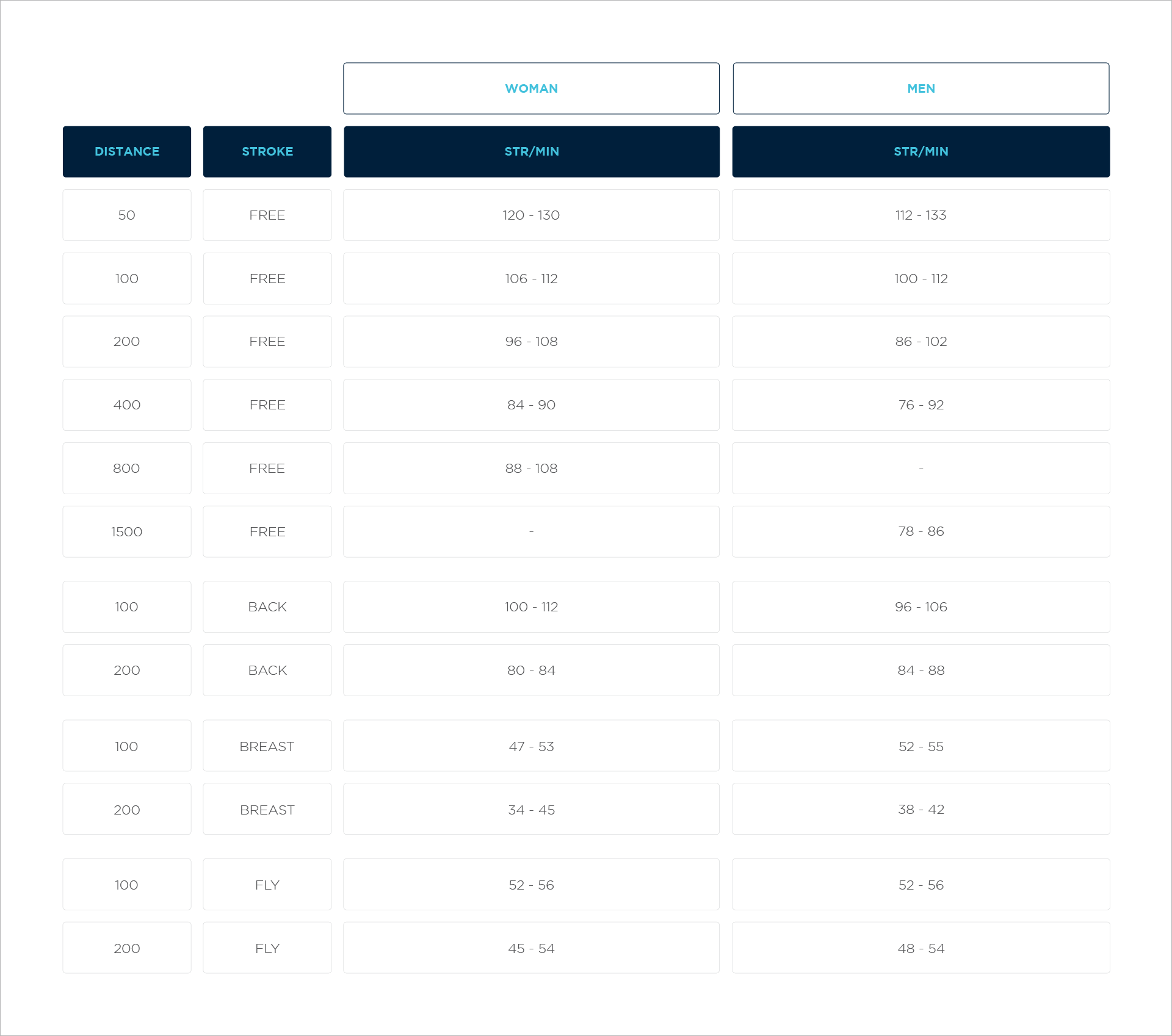
    National and World Class Ranges for Tempo and Cycles (1850 – 1995 approx). Please note that cycles are approximate and for 50 meter pools.

    The chart above shows the world class ranges for stroke rate per race. As you can see, when going from a long distance race or endurance race to a sprint or anaerobic effort your tempo and stroke rate will evidently increase.

    Spinning drill

    It is important to understand that the faster you want to swim, the higher your stroke rate needs to be. You can do several drills to drive up the turnaround of your stroke. We will focus on the spinning drill. When performing a spinning drill, you do not take stroke length or efficiency into consideration but you solely focus on getting your arm spins as fast as you can. You can do this exercise on any swim stroke. Your focus should be on the speed of your strokes rather than the amount of water you move with one stroke. Because of this, you neurologically train your body to make very quick movements, as you would during a high stroke rate race. Keep in mind this strategy only works when you are a more experienced swimmer with a good distance per stroke. Stroke efficiency still prevails over stroke rate, more on this topic in our next blogs.
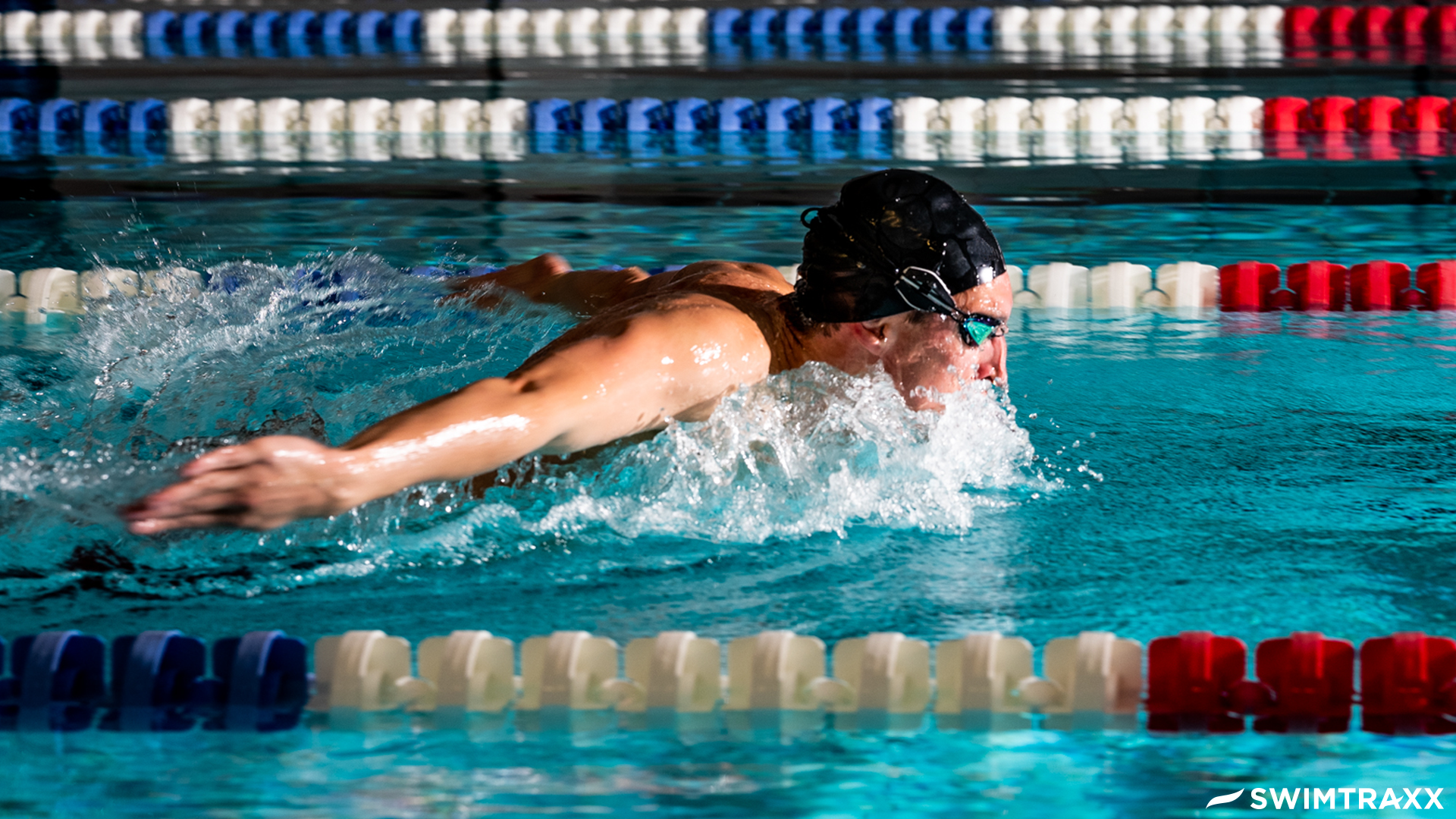
    Picture: Swimtraxx founder Jeroen Lecoutere working on his butterfly stroke rate.

    Take home message

    As well as when training for race pace (see previous blog) you should always have a race plan in mind when training your stroke rate. It is important to aim for a certain target stroke rate and work up to that point bit by bit during swim training. You should improve not only your race pace but combine it with training your stroke rate. Swimtraxx One can help you train both your race pace and stroke rate by giving you the exact information on both in real-time. You will have a clear idea of what is still required in order to achieve your target stroke rate. By improving your stroke rate your pace will gradually improve as well. In our next blogs, we will extend this blog by focusing on stroke length and efficiency. Even though stroke rate is an excellent factor to build on, you should always take stroke efficiency in consideration.


    Track your training with real data

    Swimtraxx One measures heart rate, stroke rate, pace, and more — right on your goggles.

    Not ready yet? Stay in the loop:
  • 4 Tips to pace your race

    Pacing your race is a commonly overlooked skill to swim a race, even though this is a very important aspect of the sport. You should learn how to pace your race as you grow into an experienced athlete. In this process you will perfect different strategies and will learn to employ the right strategies as you progress through the season towards your most important competition.


    1. Focus on your own lane

    The first thing you should understand is that it is crucial to pace your race focussing to yourself, and not while looking at others. This is important as you have the best feeling over your own body and can feel better what your personal race pace should be. It is much easier to work up to your goal if you focus on yourself rather than letting others determine your race strategy. You should take control over your race outcome, so focus on your own lane.

    2. Prepare yourself mentally

    When you are working on your race pace, it’s all about preparation. How you build up your race might result in different outcomes. Preparing yourself mentally for what is going to come is very important. This is true for when you are preparing for long distances, or just a 50m sprint. Have a race plan in mind.

    3. Integrate race pace strategies into your workout plans

    The third tip is to integrate your race plan into your workout plan. Especially when your aim is to swim longer distances, pacing correctly can become hard. Your preparations will determine whether you are ready at your final competition and will be able to execute well. Don’t expect to perform well without the right preparation.

    Make up a race plan, preferably at the beginning of the season. This will give you the chance to better structure your workouts and you will get a better feeling of how you will be able to manage your race pace.

    Athletes and coaches should therefor always build up a race plan together. As a coach, you should help your swimmers prepare for their pacing strategy. Depending on whether you want to start strong of finish strong, a different pacing preparation in training is required. It is important to train these paces, learn how they feel and learn how to execute them.

    4. Understand that a race strategy preference can be individual

    Pacing your race is not an easy thing to do because it is not only mentally challenging, it also depends on your personal physical characteristics. Everyone is built differently and therefore every person experiences different pacing strategies in a different way. A race pace strategy should be individualized.

    Spend enough time figuring out which race pace strategy fits your personal needs best, depending on your physical and physiological traits. You can do so by testing different pacing techniques throughout the season.

    Something to also consider for in-season racing, is which stage of the season you are in. You will be working on certain aspects of your workout during different stages of the season. Choosing a certain strategy will help emphasize different parts of your workout. So, an additional tip is to test strategies throughout the season. It will give you insight in both your training progress as well as teach you how certain pacing feels and works during a race.

    Because pacing your race takes a lot of effort, both physically and mentally, knowing about proper race pace strategies is very important. So, last but not least, here are 3 of the most common race pace strategies that can be performed:

    • Go out hard – This strategy means that you blast out and see where you go. Typically you would do this when you have a strong aerobic power. When you don’t have the speed to build up your race but you have a lot of aerobic power it is smartest to go out hard and keep that pace.
    • Negative split – With this strategy your focus is mainly on the end of your race. When executing this strategy, you would generally hold back in the first half of your race and swim faster towards the end. This results in a very strong finish after a slower start. So if you are interested in a strong (comeback) finish, this is your go-to strategy.
    • Consistent pace – The most common race pace strategy for longer distances would have to be the consistent pace. This means you keep your pace the same during your race. However, the fact that you keep your pace consistent doesn’t mean your effort stays the same. If you keep the same effort you will go slower towards the end. This means that if you want a consistent pace your effort will gradually increase towards the end.

    With Swimtraxx One, you can train your race pace during your workout. Swimtraxx One tracks every lap of your workout as well as every split time in real time. You can check your logbook and follow up your sets in the Swimtraxx app and learn how you want to pace sets and races based on this valuable information.


    Track your training with real data

    Swimtraxx One measures heart rate, stroke rate, pace, and more — right on your goggles.

    Not ready yet? Stay in the loop:
  • How to use heart rate to improve your swimming workout.

    Why is heart rate used in sports?

    Many athletes and coaches measure physiological parameters to quantify the work performed by the human body during a workout. One of the most commonly known parameters is heart rate.

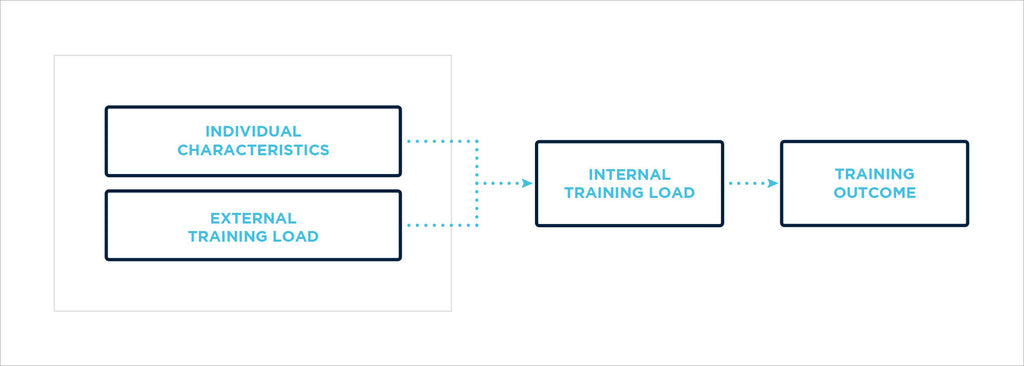
    While working out, your body is performing a specific workout routine. This is scientifically referred to as the external load. The goal of this workout routine or external load is to trigger a response of the body. The response to this external load is called the internal load.

    During a workout, the body reacts to what is required from it by for instance adjusting oxygen intake, adjusting heart rate, activating energy systems, dilating blood vessels, … As there is a direct effect on heart rate when a change in internal load occurs, it is a useful parameter to monitor this internal load.

    Internal and external load lead to a training outcome
    Figure: An external load leads to an internal load, which in turn leads to a training outcome.

    How is heart rate typically used in swimming?

    Training programs are often designed using heart rate zones to indicate effort. Heart rate zones can be used to organize different workout intensities. The heart rate zone system is used to measure the internal load of the body during workouts. It also translates the measured value to a respective training effect.

    The figure below shows a typical split of heart rate zones and their respective training effect. As you can see, these zones are also at times indicated by color codes through a system introduced by famous swimming coach Jon Urbancheck.

    Borg Scale
    Figure: the Urbancheck zones.

    Let’s briefly explain the Urbancheck heart rate zone system. On the left you see the different color codes, followed by a description of what these colors stand for.

    The description goes from a white basic aerobic training to a green lactate tolerance training. Depending on what workout routine you follow, you are performing a certain color code intensity. If you amp up your training intensity you will gradually rise in color code.

    The table above also shows an indication of the energy zone you are in. Swimming sets are supported by energy from different sources, depending on the duration and intensity of that set.

    EN-1 means you find yourself in a moderate endurance zone. After this you enter the EN-2 zone which is all about threshold training. EN-3 is the last zone before you enter sprint and concerns over-threshold work. The SP-2 classification involves your best average and race pace.

    We will expand more thoroughly on the workings of different energy zones and thresholds in a future blog post. Of course, the higher the color code you’re in, the higher your estimated pace. The chart above shows pace in function of threshold, but there are different ways to communicate these.

    Every zone finally corresponds to a specific heart rate range. These values differ individually and are sometimes expressed as percentages of maximal heart rate. Heart rate is however influenced by more factors than just external training load. We will go into this in the next section.

    How not to use heart rate zones

    Heart rate zones are often misused or misinterpreted when being set up or used to evaluate a training session. The body of science is very clear: heart rate is not solely an indicator of internal load induced by the training load on the body. Heart rate is the result of multiple load factors onto the human body.

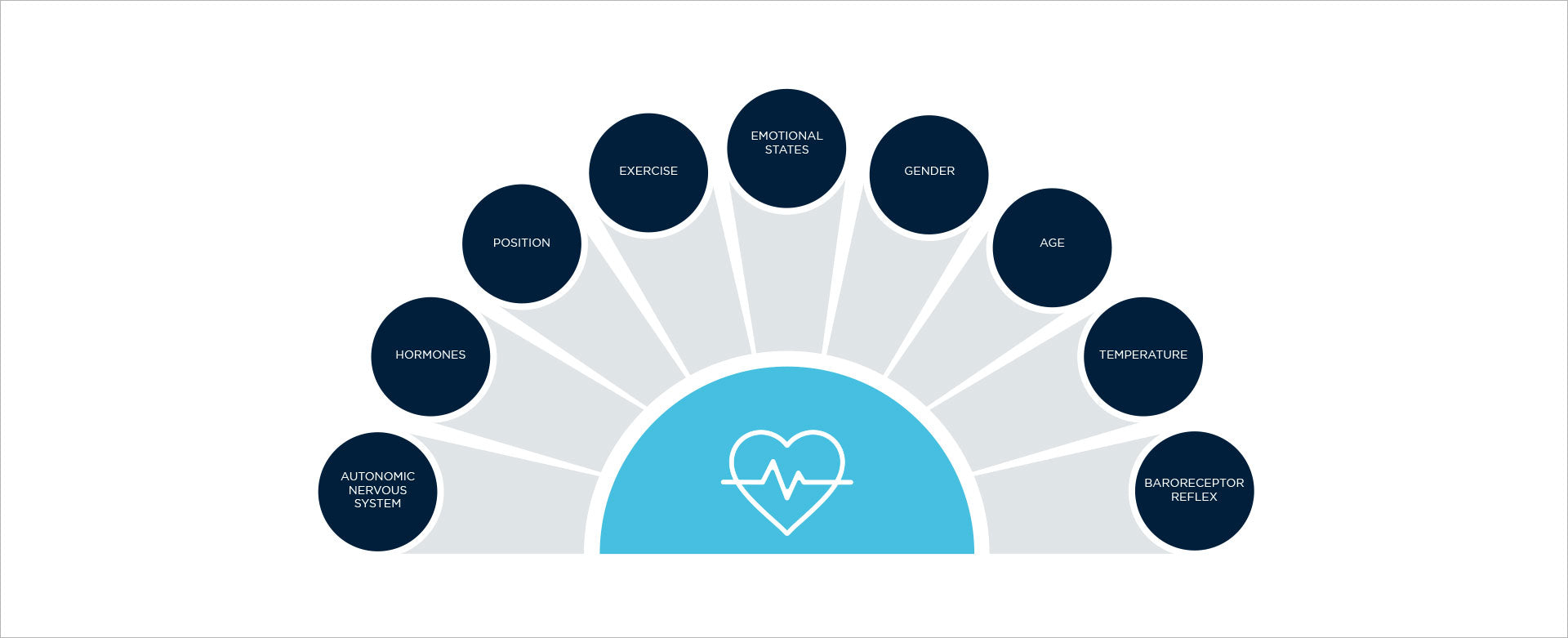
    The figure below shows a few of many factors that influence heart rate on top of an external training load. Autonomic nervous system, hormones, position, exercise, emotions, gender, age, temperature of the body and baroreceptor reflexes influence the human heart and therefore its heart rate.

    Note that these are just a few of all the things that affect heart rate and that there are a lot more things to take into consideration when measuring your heart rate. Heart rate is also an individual measure, in that way that body size and composition as well as other genetic factors influence your heart rate level at any zone. If you want to know your personal training zones, we always recommend consulting with a certified professional on a regular basis.

    Heart rate influencers
    Figure: Heart rate is influenced by many parameters.

    How to use heart rate zones

    Coaches and athletes should always be aware of the multi-factorial influence on heart rate when assessing heart rate during training.

    Let’s take an example. When an athlete is overloaded, it is possible that the heart rate of the athlete is higher during an aerobic set than usual. It would be wrong to conclude that the athlete is performing an anaerobic set because the heart rate is higher than usual. Instead, given the fatigued state of the athlete, it would be better to assess the fatigue of the athlete with a subjective measure. Doing this helps to understand that the higher heart rate is due to a tired body rather than trying to match the internal load indicator to the external load.

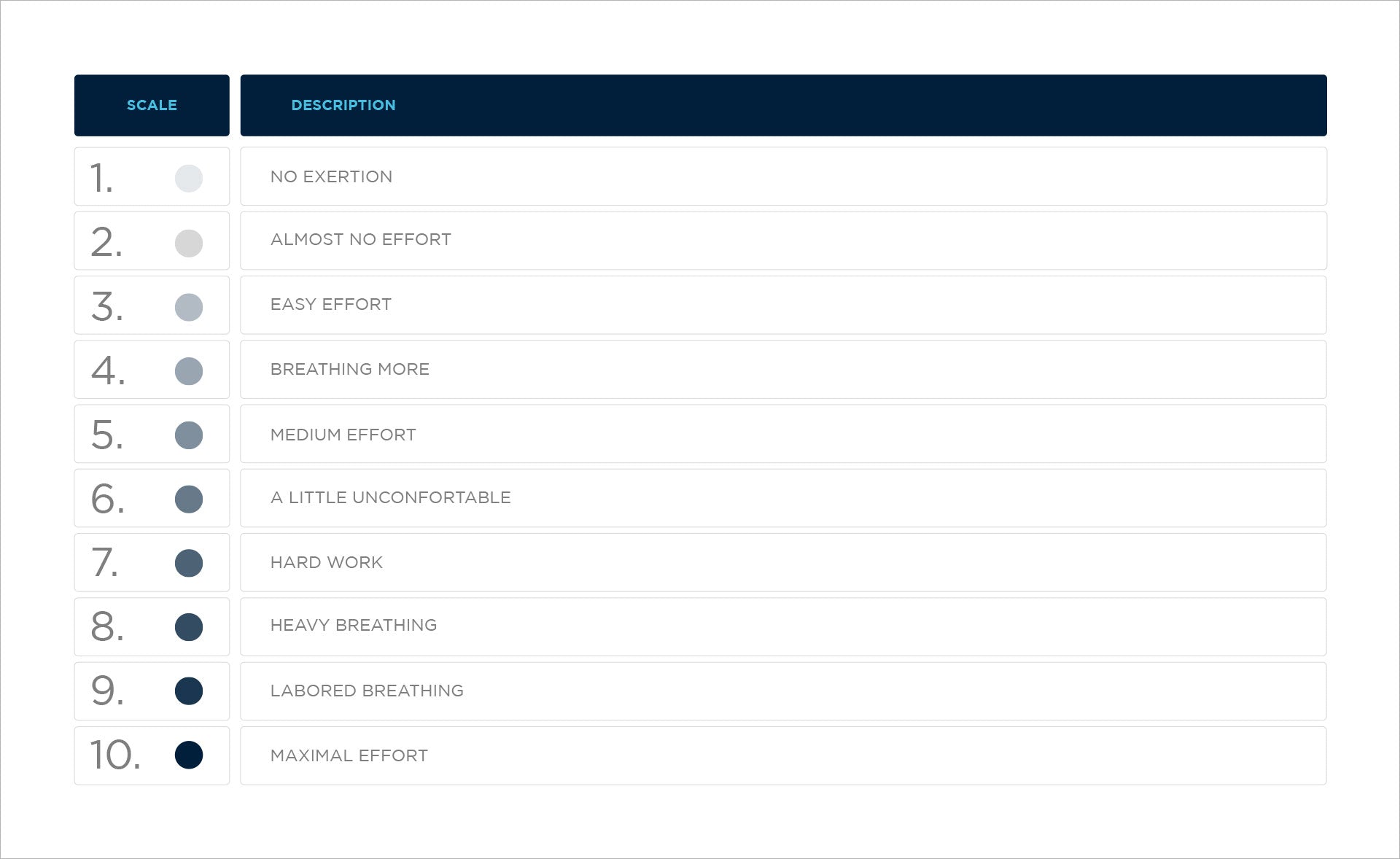
    An important (additional) indicator of internal load remains to be the rating of perceived exertion, or RPE. A well-known scale to assess this is the Borg scale. The figure below shows this scientific scale. Scientific research shows that the Borg scale or RPE is often the best indication of training intensity as perceived by an athlete during a training.

    Borg Scale
    Figure: Rating of perceived exertion (RPE) scale.

    Take home message

    Heart rate is one the most validated representations of the total internal load on the athlete’s body. Next to the external load from the workout, there are also additional factors influencing the final heart rate value.

    For coaches, it is important to understand this effect and to act accordingly, acquiring as much information as necessary from their athletes in order to make a good assessment before possibly adjusting the workout.

    For athletes, it is important to use heart rate as a way to get to know the workings of your own body. Going through age group training towards a seasoned athlete, you should get to understand how your body reacts to certain workouts or other loads, how it feels and how this is represented in your heart rate ánd RPE. The better you get to know your own body, the better you can use your RPE as a context for your heart rate for yourself and your coach.

    With Swimtraxx One, you can track your heart rate during every swimming workout. The system allows you to monitor internal and external load so you can get to know how your body works during those easy or incredibly tough sets. The device also tracks multiple swim specific biomechanical parameters next to heart rate.


    Track your training with real data

    Swimtraxx One measures heart rate, stroke rate, pace, and more — right on your goggles.

    Not ready yet? Stay in the loop:

  • A game changer has come to swimming!

    On Tuesday November 12th at 3pm, Swimtraxx launched the Swimtraxx One: the smartest swim specific system, ever. The Swimtraxx One tracks all important parameters during swimming such as lap times, stroke rates, breathing patterns and heart rate. The system clips onto your swimming goggles and can transmit the information in real time to a tablet. With Swimtraxx One, coaches no longer have to focus as much on their stopwatch during a workout. A true game changer. The system can also store your workouts so you can download and review it later through a mobile app. You can analyze and track your swim workouts to the greatest detail ever achieved to date.

    Swimtraxx Team + Swimtraxx One
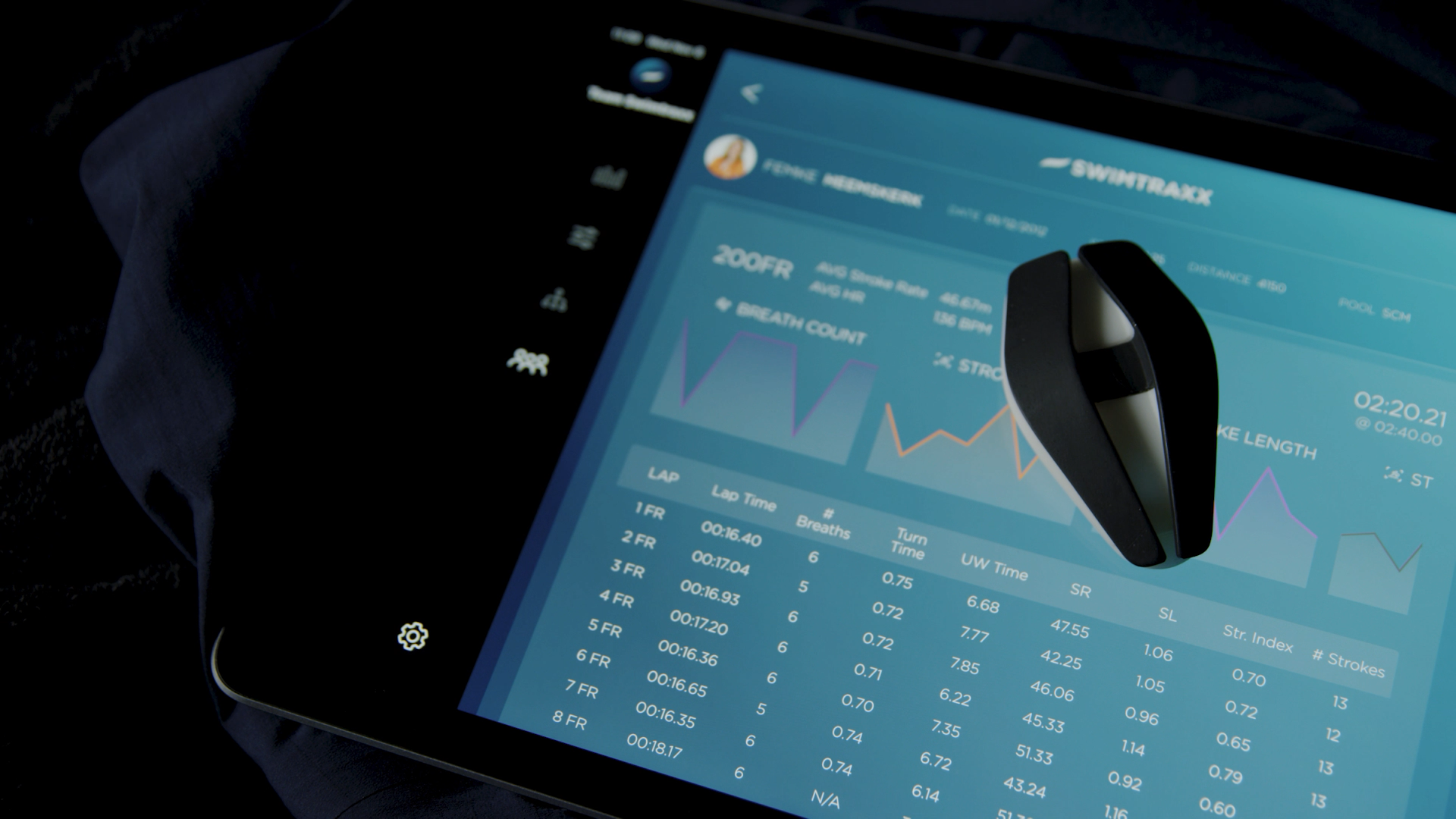
    The Swimtraxx Team app running on a tablet connected to a Swimtraxx One.

    “Coming from a swimming background ourselves, the most common feedback we faced about existing swimming trackers was that they are uncomfortable and do not provide valuable insights for athletes and coaches”, founder Jeroen Lecoutere says,“That’s why we spent a lot of effort on research on how to make the Swimtraxx One as small and as comfortable as possible. We prioritized usability of both the device and app so swimmers and their coaches can track their workouts during and after a swim. The feedback so far has been unanimously positive. We are extremely proud of the result and believe this will be a true game changer for swimming as a sport.”

    The startup is also backed by Olympic medalists Femke Heemskerk and Pieter Timmers. “It’s the little things that are vital. Little things make big things happen”, Olympic swimming champion Heemskerk shares, “The device is really small and will help me get more info on how I train,and on which details I can improve. It’s for that reason I became a Swimtraxx ambassador.”

    Pieter Timmers & Femke Heemskerk
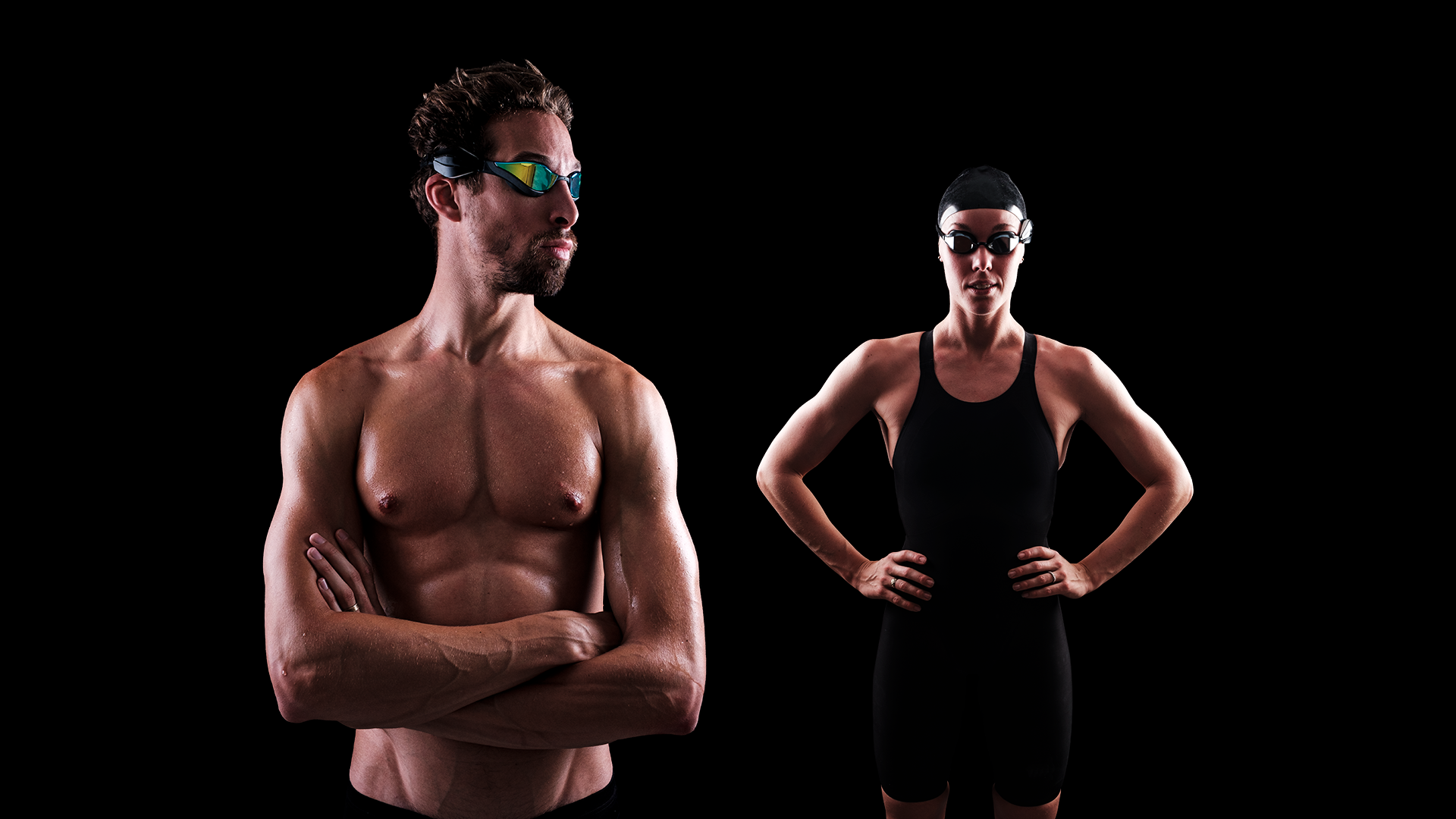
    Olympic silver medalist Pieter Timmers and Olympic Champion Femke Heemskerk.

    “Swimtraxx One was developed in close collaboration with swimmers and coaches with the aim to change the world of swimming for all swimmers and coaches.”, Lecoutere adds, “We have worked with athletes of all levels, which has led to a system that suits everyone: Olympians, collegiate swimmers, club swimmers, triathletes and recreational swimmers. Basically, anyone that wants to track a swimming workout.”

    Swimtraxx One is currently available as a preorder on our website at a significant discount . The company also provides the opportunity to buy gift cards with the upcoming festive season in mind. The Belgian startup is looking for support from swimmers, triathletes and coaches to put this system, which is currently in a pre-production stage, into production and into swimmers’ hands by Spring 2020.


    Curious what we’re building?

    Learn more about the technology behind the world’s smartest swim tracker.

    Not ready yet? Stay in the loop: